If this is a life-threatening emergency, call 911 immediately.
Chest pain, severe difficulty breathing, stroke symptoms, major bleeding, or loss of consciousness require emergency medical services. This page describes non-emergency care delivered at home by skilled nurses.
Understanding Arterial Ulcers
What you should know
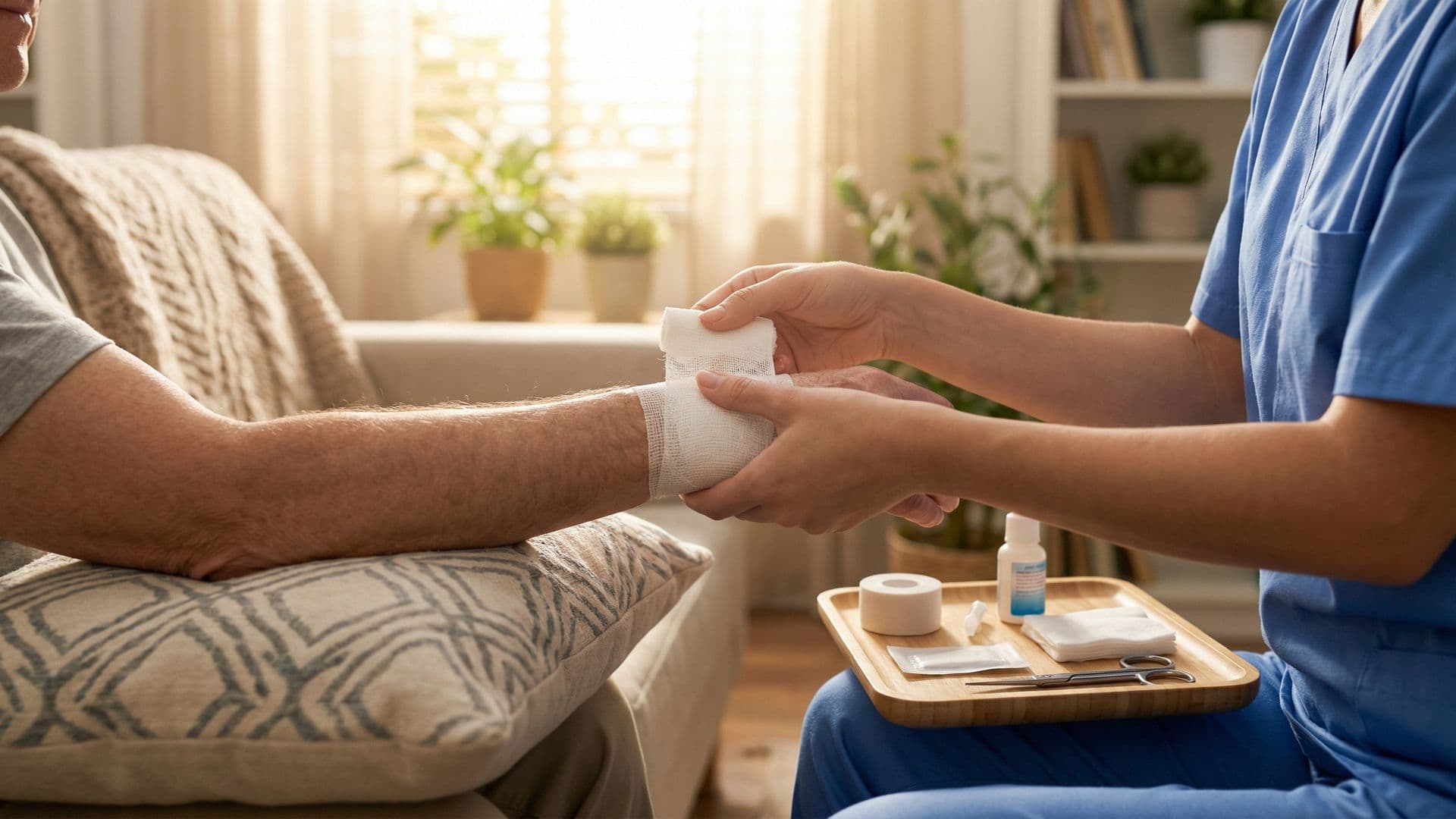
Arterial ulcers develop when inadequate blood supply to the legs (peripheral arterial disease) prevents tissue from receiving enough oxygen and nutrients. Unlike venous ulcers, which tend to be shallow and on the inner ankle, arterial ulcers are often found on the toes, feet, and outer ankle, and are typically deeper, more painful, and slower to heal.
Arterial ulcers are the most challenging chronic wounds to manage because the underlying blood supply issue limits the body's ability to heal. Treatment must address both the wound itself and the vascular disease causing it. Some patients require vascular intervention (angioplasty, bypass surgery) to restore blood flow before wound healing can proceed.
Our wound care nurses provide meticulous wound care while monitoring perfusion status (pulses, skin temperature, capillary refill). We coordinate closely with vascular surgeons because wound care alone — without adequate blood supply — cannot heal these wounds. Compression is typically contraindicated (unlike venous ulcers), making accurate wound classification essential.
Warning signs
You may need care if…
Your care plan
How we help at home
Expert care for arterial ulcers,
delivered to your home
Our clinicians bring hospital-level expertise to the comfort and safety of where you live.
Common questions
Arterial Ulcers — Common Questions
Arterial ulcers are caused by insufficient blood supply (not enough blood getting to the tissue), while venous ulcers are caused by blood pooling (blood not getting back out). The distinction matters enormously for treatment — compression therapy that helps venous ulcers can actually worsen arterial ulcers by further restricting blood flow. Accurate assessment by a skilled wound care nurse is essential.
Small arterial ulcers in patients with mild PAD may heal with wound care and risk factor management alone. However, many arterial ulcers require vascular intervention to restore adequate blood flow before healing can occur. Our nurses assess wound progress and escalate to vascular surgery when the wound isn't responding to conservative management.
Related services
Services involved in your care
These are the clinical services our team may use when managing arterial ulcers at home.
Wound Care
Specialized wound care management for chronic, surgical, and complex wounds using evidence-based treatment protocols.
Learn more
Skilled Nursing Care
Our registered nurses provide comprehensive medical care in the comfort of your home, ensuring safety, comfort, and optimal health outcomes.
Learn more
Cardiovascular Care
Comprehensive cardiac care management for patients with heart disease, hypertension, and other cardiovascular conditions.
Learn moreGet help with arterial ulcers at home
Our experienced clinicians provide expert wound care care in the comfort of your home. Contact us today to discuss your needs.
For life-threatening emergencies, always call 911.