If this is a life-threatening emergency, call 911 immediately.
Chest pain, severe difficulty breathing, stroke symptoms, major bleeding, or loss of consciousness require emergency medical services. This page describes non-emergency care delivered at home by skilled nurses.
Understanding Venous Ulcers
What you should know
Venous ulcers (venous stasis ulcers) are chronic wounds that develop when veins in the legs don't effectively return blood to the heart. This creates increased pressure in the leg veins, causing fluid to leak into surrounding tissue, leading to swelling, skin changes, and eventually open wounds — typically on the inner ankle or lower calf.
Venous ulcers account for roughly 70% of all chronic leg wounds. They're frustrating because they heal slowly and recur frequently — up to 70% recurrence rate within 5 years without proper ongoing management. The cornerstone of treatment is compression therapy, which reduces venous pressure and promotes healing.
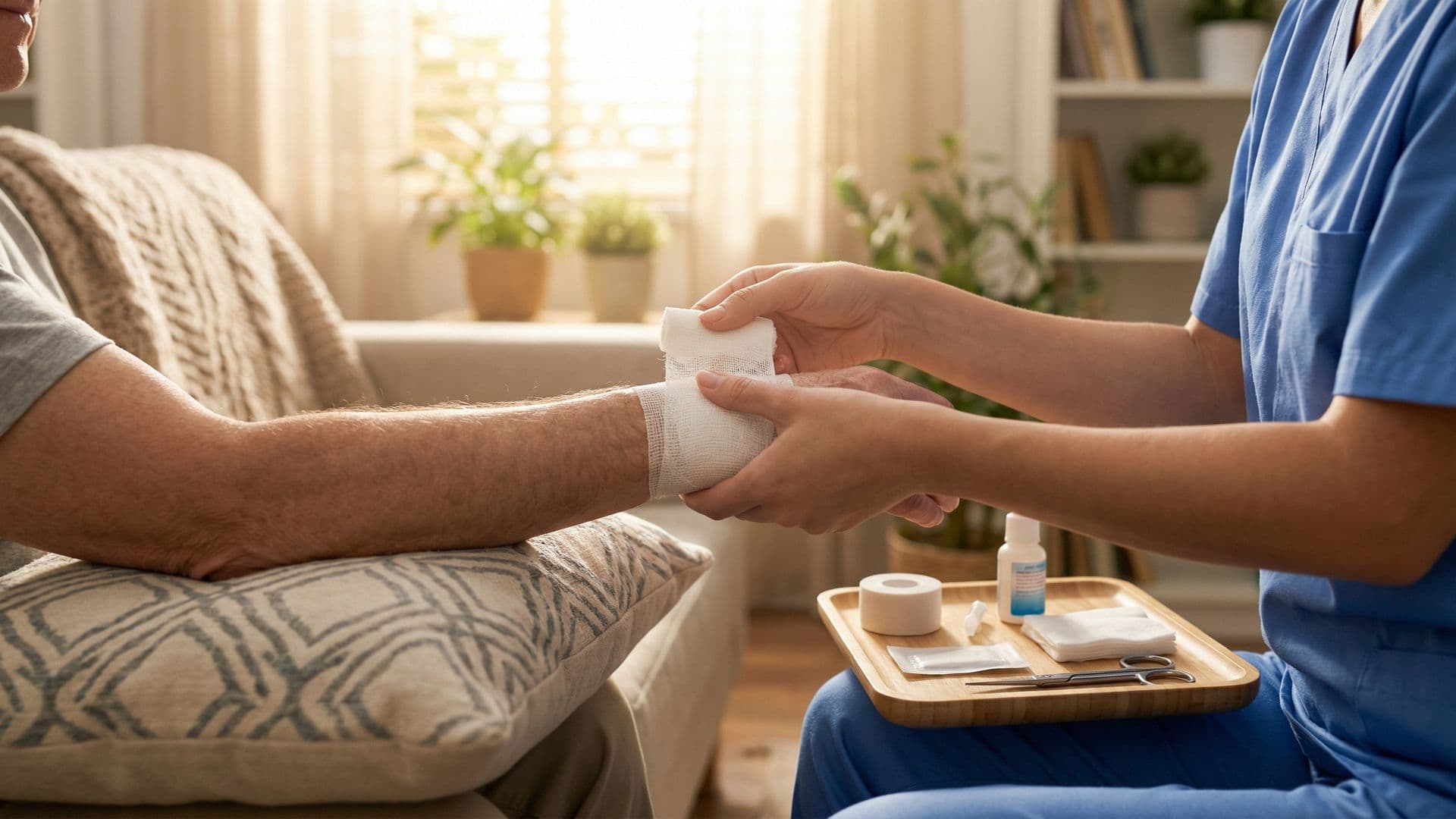
Our wound care nurses manage venous ulcers through evidence-based wound care, compression therapy (wraps, stockings, or compression devices), skin care for the surrounding tissue (venous dermatitis), and patient education on leg elevation and activity. We also coordinate with vascular specialists when underlying venous disease needs intervention.
Warning signs
You may need care if…
Your care plan
How we help at home
Expert care for venous ulcers,
delivered to your home
Our clinicians bring hospital-level expertise to the comfort and safety of where you live.
Common questions
Venous Ulcers — Common Questions
Compression is the most evidence-based treatment for venous ulcers. It counteracts the high venous pressure that caused the wound in the first place. Without compression, wounds heal slowly or not at all, and even healed wounds are very likely to recur. Compression increases healing rates by 40–60% compared to wound care alone.
Venous ulcers can be healed, but the underlying venous disease remains. Long-term management with compression stockings, leg elevation, activity, and skin care is essential to prevent recurrence. Some patients benefit from vascular procedures to address the root cause of venous reflux.
Related services
Services involved in your care
These are the clinical services our team may use when managing venous ulcers at home.
Wound Care
Specialized wound care management for chronic, surgical, and complex wounds using evidence-based treatment protocols.
Learn more
Skilled Nursing Care
Our registered nurses provide comprehensive medical care in the comfort of your home, ensuring safety, comfort, and optimal health outcomes.
Learn moreGet help with venous ulcers at home
Our experienced clinicians provide expert wound care care in the comfort of your home. Contact us today to discuss your needs.
For life-threatening emergencies, always call 911.