If this is a life-threatening emergency, call 911 immediately.
Chest pain, severe difficulty breathing, stroke symptoms, major bleeding, or loss of consciousness require emergency medical services. This page describes non-emergency care delivered at home by skilled nurses.
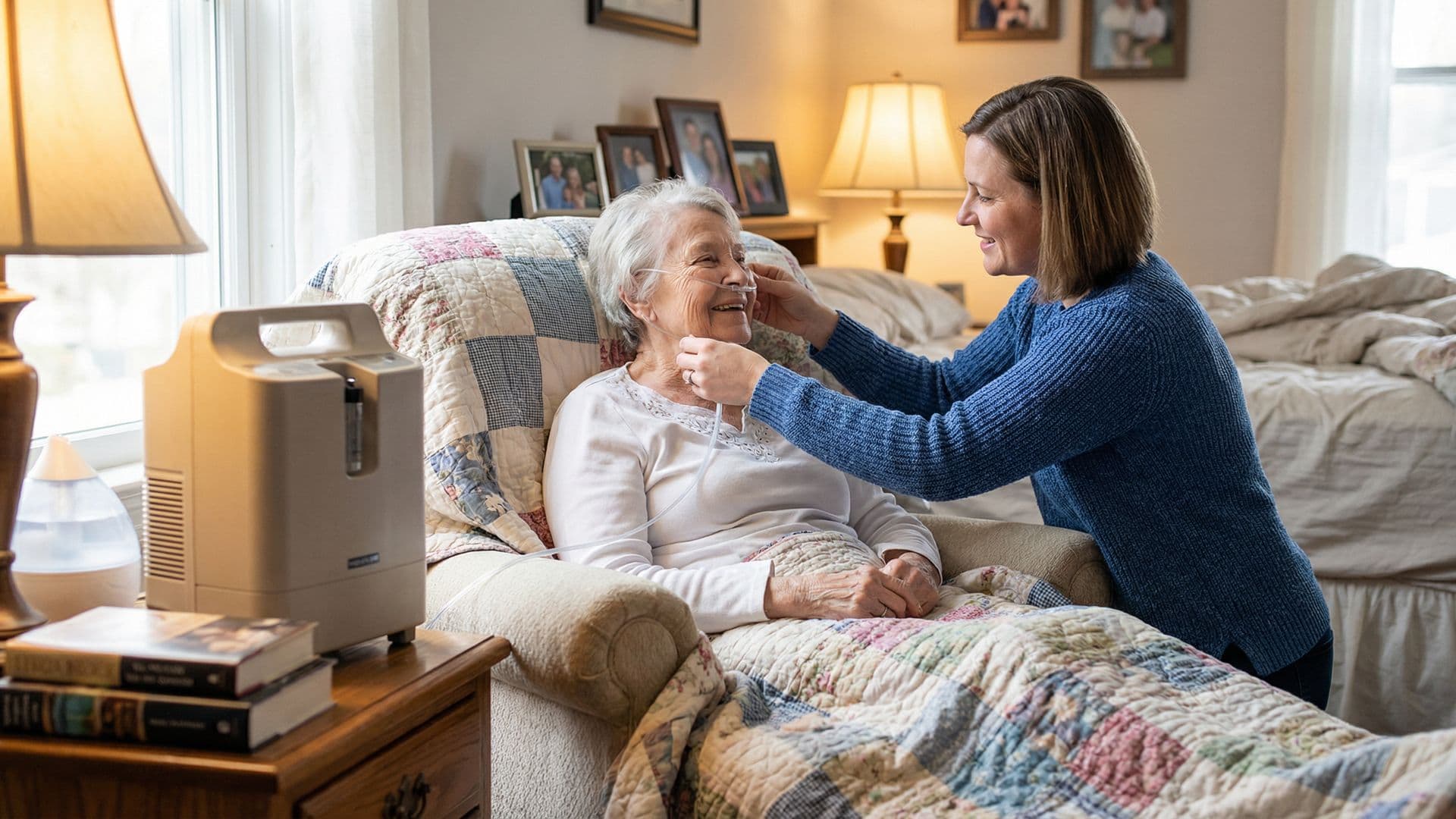
Understanding Tracheotomy Care
What you should know
A tracheotomy (tracheostomy) is a surgically created opening in the neck that provides a direct airway to the trachea. Tracheostomies are placed when patients need long-term mechanical ventilation, have upper airway obstruction, or require airway protection due to neurological conditions or surgery.
Managing a tracheostomy at home is one of the most technically demanding situations in home health care. It requires meticulous care to prevent life-threatening complications including tube obstruction, accidental decannulation (tube coming out), and infection. Caregivers must learn suctioning, tube changes, emergency management, and daily cleaning — skills that are initially frightening but become routine with proper training.
Our respiratory nurses are experienced in tracheostomy management. We provide hands-on training for patients and caregivers, perform scheduled tube changes, assess for complications, manage any ventilator equipment, and ensure everyone in the household knows what to do in an emergency. This is high-acuity care delivered in the comfort of home.
Warning signs
You may need care if…
Your care plan
How we help at home
Expert care for tracheotomy care,
delivered to your home
Our clinicians bring hospital-level expertise to the comfort and safety of where you live.
Common questions
Tracheotomy Care — Common Questions
Many tracheostomy patients can speak using a speaking valve (Passy-Muir valve) that redirects exhaled air up through the vocal cords. Not all patients are candidates — it depends on the type of tracheostomy tube and the patient's ability to tolerate the valve. Our speech therapists assess for speaking valve candidacy and provide communication training.
Most tracheostomy tubes are changed every 1–4 weeks, depending on the tube type and your physician's orders. The first change is typically done by the physician or experienced nurse; subsequent changes can be taught to trained caregivers. Our nurses perform changes and train caregivers when appropriate.
Related services
Services involved in your care
These are the clinical services our team may use when managing tracheotomy care at home.
Respiratory Care
Expert management of respiratory conditions including COPD, asthma, pneumonia, and post-COVID recovery.
Learn more
Skilled Nursing Care
Our registered nurses provide comprehensive medical care in the comfort of your home, ensuring safety, comfort, and optimal health outcomes.
Learn more
Speech Therapy
Expert speech-language pathologists treating communication and swallowing disorders to improve quality of life.
Learn moreGet help with tracheotomy care at home
Our experienced clinicians provide expert respiratory care in the comfort of your home. Contact us today to discuss your needs.
For life-threatening emergencies, always call 911.