If this is a life-threatening emergency, call 911 immediately.
Chest pain, severe difficulty breathing, stroke symptoms, major bleeding, or loss of consciousness require emergency medical services. This page describes non-emergency care delivered at home by skilled nurses.
Understanding Postoperative Care
What you should know
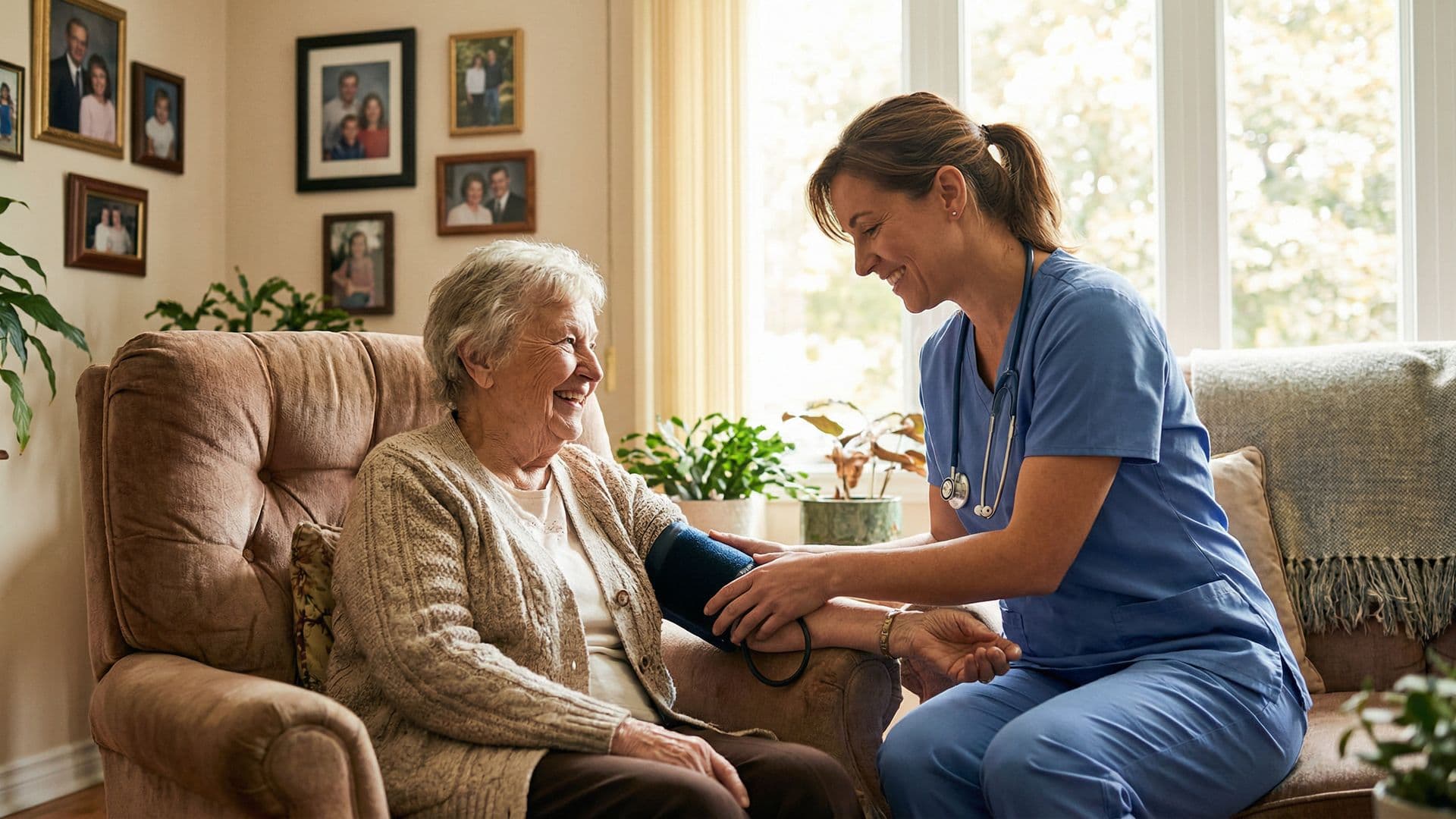
Postoperative care at home is one of the most common — and most important — reasons patients receive home health services. After surgery, patients are discharged earlier than ever, often while still managing surgical wounds, drains, pain medications, activity restrictions, and blood clot prevention. Having a skilled nurse come to your home during this vulnerable period catches complications early and keeps recovery on track.
Our post-surgical care covers the full spectrum: wound care (incision monitoring, dressing changes, staple/suture removal), drain management, pain medication management, education on activity restrictions and progression, and coordination with your surgeon on any concerns. Physical and occupational therapy help you regain strength and independence safely.
Whether you've had orthopedic surgery, abdominal surgery, cardiac surgery, or any other procedure, our team provides the skilled monitoring and care that used to happen in the hospital — now delivered in the comfort of your home.
Warning signs
You may need care if…
Your care plan
How we help at home
Expert care for postoperative care,
delivered to your home
Our clinicians bring hospital-level expertise to the comfort and safety of where you live.
Common questions
Postoperative Care — Common Questions
Typically within 24–48 hours of hospital discharge. Your surgeon writes the home health orders before discharge, and our intake team coordinates to get a nurse to you as quickly as possible. The first visit focuses on wound assessment, medication reconciliation, and establishing the care plan.
Increasing redness, swelling, warmth, or drainage from the incision; fever over 101°F; sudden increase in pain; calf pain or swelling (possible blood clot); difficulty breathing; and confusion. Our nurses educate you on the specific warning signs for your type of surgery and ensure you know when to call.
Related services
Services involved in your care
These are the clinical services our team may use when managing postoperative care at home.
Skilled Nursing Care
Our registered nurses provide comprehensive medical care in the comfort of your home, ensuring safety, comfort, and optimal health outcomes.
Learn more
Physical Therapy
Our licensed physical therapists help restore activity, strength, and motion following illness, injury, or surgery with personalized treatment plans.
Learn more
Occupational Therapy
Helping patients of all ages regain independence in everyday activities through therapeutic techniques and adaptive strategies.
Learn more
Wound Care
Specialized wound care management for chronic, surgical, and complex wounds using evidence-based treatment protocols.
Learn moreGet help with postoperative care at home
Our experienced clinicians provide expert general care in the comfort of your home. Contact us today to discuss your needs.
For life-threatening emergencies, always call 911.