If this is a life-threatening emergency, call 911 immediately.
Chest pain, severe difficulty breathing, stroke symptoms, major bleeding, or loss of consciousness require emergency medical services. This page describes non-emergency care delivered at home by skilled nurses.
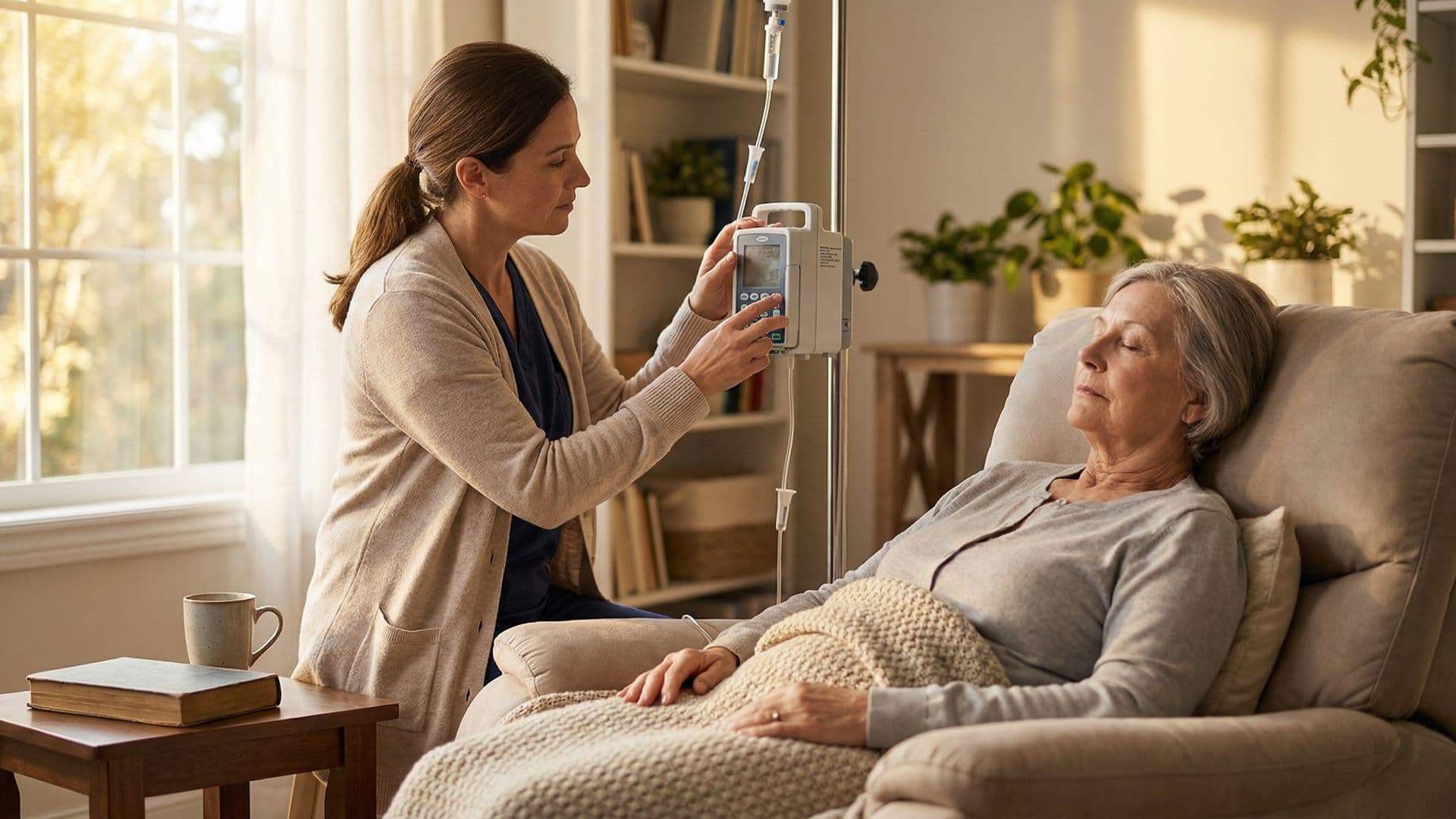
Understanding Total Parenteral Nutrition (TPN)
What you should know
Total parenteral nutrition (TPN) provides complete nutrition intravenously — bypassing the digestive tract entirely. TPN is used when the GI tract can't be used for nutrition: severe Crohn's disease, short bowel syndrome, bowel obstruction, or after certain surgeries. It delivers amino acids, glucose, lipids, electrolytes, vitamins, and minerals directly into the bloodstream through a central venous catheter.
Home TPN is a highly specialized form of home infusion. It requires meticulous central line care (infection of a central line can be life-threatening), careful monitoring of blood sugar and electrolytes, sterile technique during setup, and coordination with a specialized pharmacy that compounds custom TPN formulations.
Our infusion nurses are trained in home TPN management. We teach patients and caregivers the full process — from sterile line access to pump programming to disconnection. We monitor labs, watch for metabolic complications, and coordinate with your physician and TPN pharmacy on formula adjustments. For many patients, home TPN restores nutritional stability and quality of life that would otherwise require permanent hospitalization.
Warning signs
You may need care if…
Your care plan
How we help at home
Expert care for total parenteral nutrition (tpn),
delivered to your home
Our clinicians bring hospital-level expertise to the comfort and safety of where you live.
Common questions
Total Parenteral Nutrition (TPN) — Common Questions
Duration depends on the underlying condition. Some patients need TPN temporarily while their GI tract heals (weeks to months). Others with permanent GI conditions (short bowel syndrome, for example) may need TPN lifelong. Your physician determines when — and if — it's safe to transition to enteral or oral nutrition.
Many home TPN patients lead active lives. TPN is typically infused overnight (10–14 hours), leaving the day free. With proper training and a portable pump, some patients even travel. Our nurses help you develop a routine that integrates TPN into your life rather than the other way around.
Related services
Services involved in your care
These are the clinical services our team may use when managing total parenteral nutrition (tpn) at home.
Infusion Services
Home-based intravenous therapy administered by specially trained nurses for various medical conditions.
Learn more
Skilled Nursing Care
Our registered nurses provide comprehensive medical care in the comfort of your home, ensuring safety, comfort, and optimal health outcomes.
Learn moreGet help with total parenteral nutrition (tpn) at home
Our experienced clinicians provide expert general care in the comfort of your home. Contact us today to discuss your needs.
For life-threatening emergencies, always call 911.