If this is a life-threatening emergency, call 911 immediately.
Chest pain, severe difficulty breathing, stroke symptoms, major bleeding, or loss of consciousness require emergency medical services. This page describes non-emergency care delivered at home by skilled nurses.

Understanding Transient Ischemic Attack (TIA)
What you should know
A transient ischemic attack — often called a mini-stroke — is a temporary disruption of blood flow to the brain that causes stroke-like symptoms lasting minutes to hours. Unlike a full stroke, a TIA doesn't cause permanent brain damage. But it's a serious warning: about 1 in 3 people who have a TIA will eventually have a stroke, and about half of those strokes occur within the first year.
After a TIA, the priority is preventing a full stroke. This requires aggressive risk factor management — blood pressure control, cholesterol management, blood thinner therapy, diabetes control, smoking cessation, and lifestyle modifications. Each of these involves medications, monitoring, and behavior change.
Our skilled nurses provide the intensive monitoring and education needed after a TIA: medication management for new prescriptions (often 3–5 new medications), blood pressure monitoring, lab coordination, and education on stroke warning signs. We help patients understand that a TIA is not a minor event — it's a critical opportunity to prevent a devastating one.
Warning signs
You may need care if…
Your care plan
How we help at home
Expert care for transient ischemic attack (tia),
delivered to your home
Our clinicians bring hospital-level expertise to the comfort and safety of where you live.
Common questions
Transient Ischemic Attack (TIA) — Common Questions
Very serious — not because of the TIA itself (symptoms resolve), but because of what it predicts. A TIA means you have the same risk factors and vascular disease that cause strokes. Without intervention, the risk of a full stroke is high, especially in the first 90 days. The good news is that aggressive risk factor management can dramatically reduce that risk.
Most likely, yes. Blood thinners (like aspirin or clopidogrel), blood pressure medications, and statins are typically prescribed long-term after a TIA. These medications address the underlying conditions that caused the TIA. Our nurses help you understand each medication's purpose and manage any side effects.
Related services
Services involved in your care
These are the clinical services our team may use when managing transient ischemic attack (tia) at home.
Neurological Care
Specialized care for patients with stroke, Parkinson's, MS, and other neurological conditions.
Learn more
Skilled Nursing Care
Our registered nurses provide comprehensive medical care in the comfort of your home, ensuring safety, comfort, and optimal health outcomes.
Learn more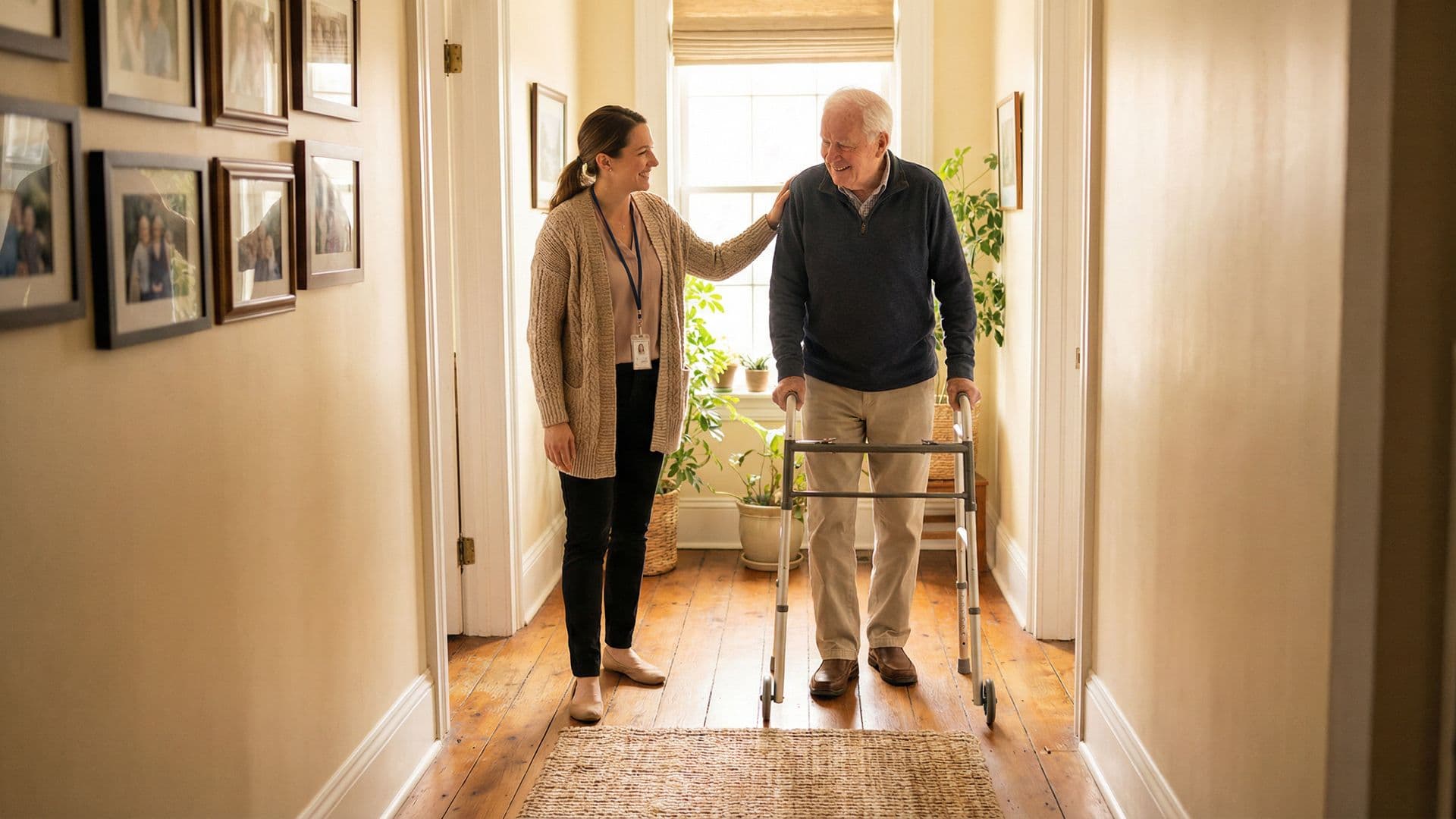
Physical Therapy
Our licensed physical therapists help restore activity, strength, and motion following illness, injury, or surgery with personalized treatment plans.
Learn moreGet help with transient ischemic attack (tia) at home
Our experienced clinicians provide expert neurological care in the comfort of your home. Contact us today to discuss your needs.
For life-threatening emergencies, always call 911.